A warning before I begin: this may be the strangest blog post I've ever written. It's not about politics, or sports, or rock and roll. It's about... pigeons. It all started the other day. I was taking a break from working on my syllabi for the upcoming semester, and I came downstairs to the living room. As I looking out the window at the bird feeder (lots of sparrows, grackles, a cardinal or two, and the occasional woodpecker), something caught my eye-- a single multi-colored pigeon on the lawn.
Now, I'm sure I am not alone in saying I'm not fond of pigeons. Yes, they're intelligent, and they mate for life, but they also tend to make a mess wherever they go; and if you feed one of them, suddenly you have twenty more wanting to be fed. Pigeons on the lawn aren't unusual-- they come in to get the seeds that fall to the ground. But this pigeon was behaving oddly. It wasn't eating or walking the way pigeons usually do. In fact, it was walking as if it couldn't balance. When I looked more closely, it was obvious why-- one of the pigeon's wings was broken.
At some point, the pigeon vanished, and I didn't think any more about it, but the next day, there it was again and it didn't look any better. But when it went out near the seeds on the ground, two larger pigeons attacked it. I had never seen this before: I had witnessed males pecking each other as they tried to show dominance, but this was two pigeons jumping on the wounded pigeon and knocking it over. And they left it there, on its back, unable to right itself.
I wasn't sure what to do, but watching it struggle, I knew I couldn't just leave it like that, so I turned it right-side up. It slowly walked under the porch, and there it stayed, as if it knew that was a safe place. Every now and then, it comes out from under the porch, but it can't walk very well yet. So, my husband and I have put a little bowl of water and a little bowl of birdseed nearby. This morning, the pigeon looked a little better. I have no idea if it will recover, but somehow, I felt I ought to make it comfortable, for however long it has left.
Maybe that seems silly, but I guess it really bothered me to see those two pigeons bullying the injured bird and leaving it to die. Okay fine, in nature, those things happen. But it still didn't feel right to just do nothing. My hope is the bird will recover, although I don't know if its wing will heal up. For now, it seems comfortable, safe from predators (and bullies). Meanwhile, I wonder if my husband and I did the right thing. I know some websites say that when you see an injured animal, you should just leave it there, and a few others say to rescue it. I don't particularly want a pet pigeon, thanks, but I do want to see this one have a chance to live.
Because I'm a teacher of ethics, I keep thinking that we shouldn't just show compassion to other humans; we should show compassion to animals too. And while this may seem like a small, and possibly silly incident, not worthy of a blog post, I've been thinking about it for several days now, as I watch the pigeon seeming to improve. Is what I did compassionate, or was it foolish? You tell me.
Monday, August 31, 2020

Saturday, August 15, 2020
Finding Role Models in Difficult Times
100 years ago, women in America finally got the right to vote. Some states and territories, mostly out west, had given women the vote as far back as 1869 (Wyoming was the first); but it took until 1920 for all women to gain what was then called "suffrage." In commemoration of that achievement, my local newspaper, the Quincy (MA) Patriot-Ledger, was among the many to provide a list of groundbreaking women, many of whom are nationally famous. But I was genuinely surprised when one of the editors let me know I would be including in a list of noteworthy women from the South Shore, the part of Massachusetts south of Boston (where I live). I've never thought of myself as noteworthy or historic, and yet, there I was on the list, celebrated not just for discovering the rock band Rush but for being a media historian, an author, and a trailblazer for women in radio. https://www.patriotledger.com/entertainmentlife/20200815/their-legacy-marches-on-celebrate-women-of-century-with-look-at-historic-south-shore-figures?fbclid=IwAR12bPZKxemEcC90wEcb-bJSTYa23q07ySkfSqK9vJgjV068vDU1SgV2Ppk
But nothing happens by accident. While we'd all like to think of ourselves as totally self-sufficient and independent, the truth is we all get by with a little help from our friends. In fact, very few of us have managed to achieve much without having role models. In some cases, our role models are people we actually know; they may not be famous, but they were there to give us good advice when we needed it. In other cases, our role models are people we never met, but we feel like we know them, because their stories have inspired us. Over the years, whenever I've felt discouraged, I've found that having the right role models has been very helpful. So, I'd like to introduce you to four of the women who have influenced my life.
First, as you might expect, there's my mother. Here is a photo of her taken in 1944. She had married my father in 1942 and not long after, he was sent overseas to fight in World War II. I've always thought my mother was very attractive, and I always admired how beautifully she spoke: she was self-taught, having grown up in an era when women weren't encouraged to go to college. She loved to read, and she followed current events closely. When I was growing up, she and I would often discuss what was going on in the world; it made me feel very grown up to do that. She taught me the importance of getting a good education, and she also taught me the importance of caring about others, rather than just making everything about yourself. We didn't always see eye to eye (she couldn't understand why I wanted to leave Boston to pursue a career in broadcasting, for example), but she was one of the most spiritual and kind people I ever met.

Second, there's Eunice Randall. This is a photo of her from 1921, and as you can guess, I never met her. I wish I had. She was perhaps the first woman radio announcer in the East, and she grew up in an era when the idea of a woman having a career was considered shocking. I am told it even cost her relationships, as some of her relatives were opposed to women going to "the big city" to get a job. But, as the saying goes, nevertheless, she persisted: despite any opposition she encountered, Eunice became a ham radio operator, an announcer, a news reporter, and a radio singer. She could also build and repair radio equipment. She was only about 22 when this photo was taken. And because she was completely written out of media history, despite all her achievements, I made a promise to tell her story and get her written back in. I kept that promise. In fact, she is one of the reasons I became a media historian.

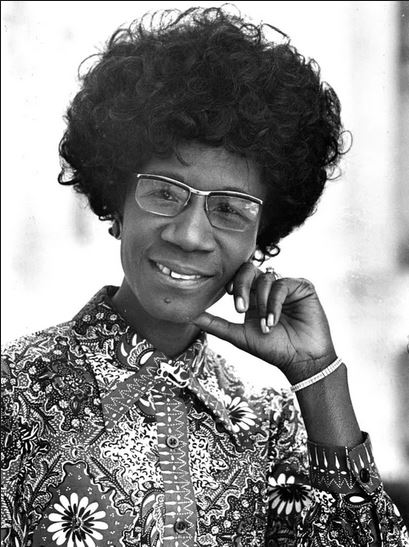
Third, there's Shirley Chisholm. She was the first Black woman ever elected to congress. She ran for president in 1972, and I worked on her campaign (although I never had the opportunity to sit and talk with her, I did hear her speak--and she was a dynamic speaker). Very few male reporters, and even fewer male politicians, took her seriously in that era; but even though she knew she wouldn't get the nomination, she never gave up and she never gave in. She was determined to be a voice for poor and working-class people, and the issues she spoke out about back then still resonate even today.

And finally, Rabbi Sally Priesand, the first female rabbi ever ordained by an American rabbinical seminary. I had the privilege of being in her congregation when I was living in New York in the mid-1970s, and she made quite an impression on me. Frankly, I never understood why it was considered such a problem for women to want to be in the clergy, but I know that in some denominations, it's still forbidden even now. Back then, seeing her lead a congregation, and lead it so well, was very inspiring to me, at a time when gender roles were still being debated and what women could or could not do was still a topic of discussion. But she had known for a long time that she wanted to be a rabbi, and ultimately, she was able to attain that goal.

Throughout my life, I had people tell me I would never succeed, I couldn't possibly do X, I shouldn't even try to do Y. The women I admire most all share the common traits of being ethical and honorable; and they didn't let their surroundings, or their era, define who they were or what they could be. Some, like my mother, followed a more traditional path (but she never stopped trying to learn, and she never stopped trying to teach). Others, like Rabbi Sally or Eunice Randall or Shirley Chisholm, carved out a path that few if any other women had walked. I'd be interested to know some of the women you admire, and why you admire them. As for me, I still can't believe there are people out there who think I'm inspirational too, but I'm told there are. And for that, I am very grateful.
But nothing happens by accident. While we'd all like to think of ourselves as totally self-sufficient and independent, the truth is we all get by with a little help from our friends. In fact, very few of us have managed to achieve much without having role models. In some cases, our role models are people we actually know; they may not be famous, but they were there to give us good advice when we needed it. In other cases, our role models are people we never met, but we feel like we know them, because their stories have inspired us. Over the years, whenever I've felt discouraged, I've found that having the right role models has been very helpful. So, I'd like to introduce you to four of the women who have influenced my life.
First, as you might expect, there's my mother. Here is a photo of her taken in 1944. She had married my father in 1942 and not long after, he was sent overseas to fight in World War II. I've always thought my mother was very attractive, and I always admired how beautifully she spoke: she was self-taught, having grown up in an era when women weren't encouraged to go to college. She loved to read, and she followed current events closely. When I was growing up, she and I would often discuss what was going on in the world; it made me feel very grown up to do that. She taught me the importance of getting a good education, and she also taught me the importance of caring about others, rather than just making everything about yourself. We didn't always see eye to eye (she couldn't understand why I wanted to leave Boston to pursue a career in broadcasting, for example), but she was one of the most spiritual and kind people I ever met.

Second, there's Eunice Randall. This is a photo of her from 1921, and as you can guess, I never met her. I wish I had. She was perhaps the first woman radio announcer in the East, and she grew up in an era when the idea of a woman having a career was considered shocking. I am told it even cost her relationships, as some of her relatives were opposed to women going to "the big city" to get a job. But, as the saying goes, nevertheless, she persisted: despite any opposition she encountered, Eunice became a ham radio operator, an announcer, a news reporter, and a radio singer. She could also build and repair radio equipment. She was only about 22 when this photo was taken. And because she was completely written out of media history, despite all her achievements, I made a promise to tell her story and get her written back in. I kept that promise. In fact, she is one of the reasons I became a media historian.

Third, there's Shirley Chisholm. She was the first Black woman ever elected to congress. She ran for president in 1972, and I worked on her campaign (although I never had the opportunity to sit and talk with her, I did hear her speak--and she was a dynamic speaker). Very few male reporters, and even fewer male politicians, took her seriously in that era; but even though she knew she wouldn't get the nomination, she never gave up and she never gave in. She was determined to be a voice for poor and working-class people, and the issues she spoke out about back then still resonate even today.
And finally, Rabbi Sally Priesand, the first female rabbi ever ordained by an American rabbinical seminary. I had the privilege of being in her congregation when I was living in New York in the mid-1970s, and she made quite an impression on me. Frankly, I never understood why it was considered such a problem for women to want to be in the clergy, but I know that in some denominations, it's still forbidden even now. Back then, seeing her lead a congregation, and lead it so well, was very inspiring to me, at a time when gender roles were still being debated and what women could or could not do was still a topic of discussion. But she had known for a long time that she wanted to be a rabbi, and ultimately, she was able to attain that goal.

Throughout my life, I had people tell me I would never succeed, I couldn't possibly do X, I shouldn't even try to do Y. The women I admire most all share the common traits of being ethical and honorable; and they didn't let their surroundings, or their era, define who they were or what they could be. Some, like my mother, followed a more traditional path (but she never stopped trying to learn, and she never stopped trying to teach). Others, like Rabbi Sally or Eunice Randall or Shirley Chisholm, carved out a path that few if any other women had walked. I'd be interested to know some of the women you admire, and why you admire them. As for me, I still can't believe there are people out there who think I'm inspirational too, but I'm told there are. And for that, I am very grateful.
Thursday, July 30, 2020
Thousands of Fans Can't be Wrong
Wednesday, the 29th of July, was Geddy Lee's birthday. If you're not a fan of the rock band Rush, you may not know who Geddy Lee is (he is Rush's lead singer, and an excellent bass player too), and you may wonder why I'm devoting a blog post to him. Suffice it to say he means a lot to me (I've known him for more than four decades, and consider him a friend). He also means a lot to the band's world-wide community of fans, large numbers of whom have admired his work for as many years as I have. Rush are no longer performing-- they announced their retirement in 2015, and in early 2020, the band's drummer, Neil Peart, lost his battle with cancer. But for the fans, Rush's music lives on; and all of us celebrate their birthdays, as well as remembering the concerts we attended over the years.

So, when Geddy had his birthday, I posted several photos on social media-- including this photo, which was taken on a Thursday night, 18 July 2019, at the Brookline (MA) Booksmith, where Geddy was signing copies of his new book, "Geddy Lee's Big Beautiful Book of Bass." (For those who haven't seen photos in my blog posts before, Blogger, which publishes my blog, now makes inserting photographs much easier, allowing me to add them into my posts. Given how knowing Rush changed my life, it seems fitting that my first attempt to publish a photo is one with a member of the band.)
More than 1500 fans commented on my post, wishing Geddy a happy birthday (I passed along those wishes through his sister, with whom I've become friendly...another benefit of knowing Geddy), and offering their recollections of times they met him or times they saw him perform. A common thread, whether on Facebook, Twitter, or Instagram, was what a kind and humble person he is. Rock stars are often stereotyped as arrogant, egocentric, or vain, but Geddy is none of these. He is as down-to-earth now as he was when his career was just beginning.
Geddy is also a philanthropist, and he's a devoted family man. And yes, he's also good to his mother! He loves music, but he also loves baseball, especially the Toronto Blue Jays; and he is a collector of memorabilia related to the game. (Combining his love for philanthropy with his love for baseball, in 2008, he donated over 200 autographed baseballs, signed by Negro Leagues players, to Kansas City's Negro Leagues Baseball Museum.)
But about the photo-- the book-signing event got off to a late start because Geddy's plane was delayed. Fans patiently stood in long lines to see him, even briefly. I didn't want to bother him, given all the people eagerly wanting to say hi and get an autographed copy of his book; but when he saw me standing off to one side, he stopped what he was doing and asked everyone to wait. We hugged (this was last year, pre-pandemic), chatted very briefly, and then I asked if we could get a picture, since we hadn't seen each other in a while. Someone from the Booksmith staff kindly took the photo, and I am grateful that I could add it to my collection.
For those who don't know much about Geddy, what I find unique about him (and his band-mates) is how appreciative they have always been for what I did for them. I am known for launching their career in the US, and I always stood up for them when media critics were scornful towards them; I advocated for their star on the Hollywood Walk of Fame, and I was there to give a speech in June 2010 when they received it. And they never forgot it. And they always showed their gratitude, even years later.

My point is not that I'm such a wonderful person-- my point is that as a music director and a deejay, I helped many rock stars during my years in radio, and seldom got so much as a thank-you; in fact, I seldom heard back from any of them. But Rush always kept in touch. If they could mention me during an interview, they always did. They didn't have to. Yet they still did it. And my experience is not unique: many fans have stories of how courteous and thoughtful these guys always were. Many fans have positive recollections of meeting them, even for a brief moment at a "meet-and-greet" event.
I hope Geddy's birthday was a happy one (he spent it with his family, I am told). And I'm glad my post brought back some positive memories for the fans. In this crazy world, with a pandemic, political divisions, economic problems, and general insecurity, it's comforting to share some good music, and to keep in mind that there are still people out there who haven't changed-- they are still the same good people they always were. I don't know about you, but I find that both refreshing and encouraging.
Wednesday, July 15, 2020
All The Small Things
A couple of days ago, I lost track of what day it was. No, there's nothing wrong with me (not as far as I know!), but my experience is a common one, it turns out. I heard a commentator on TV remark that during the pandemic, every day is "Blursday," since the ways many of us mark each new day-- our routines, like going to the office or visiting friends or attending a worship service or taking a trip-- have all been disrupted. When you've been spending long hours at home, even under the best of circumstances, the days begin to have a certain sameness to them, and Monday feels like Wednesday, which feels like Friday.
I've tried to make the best of it. When we were in the midst of strict stay-at-home orders in Massachusetts, I made sure I got dressed for business every day, and I tried to schedule Zoom calls with students or colleagues, just to stay busy and to keep my communication skills current. But it didn't always help. Seeing folks on a tiny screen (or even a bigger one) isn't the same as being with them in person. I found myself missing the ability to give someone a hug, or shake their hand. It's probably my imagination, but I don't feel as alert or as sharp as I did four months ago. And based on what I've been reading from other folks, I'm not the only one who feels this way.
In Massachusetts, we have a very cautious governor who instituted rules and steps; and nearly everyone followed them. Mask wearing was not a political issue-- most of us understood the reason for it, and even now, four months later, if you go into most stores, you'll see that 99% of people wear a mask. (Some of us are trying to have fun with it: I often color-coordinate my masks with what I'm wearing, and I've also seen specially-made masks for sports fans, fans of certain rock bands, etc. The other day, I was online and noticed about fifteen pages of craftspeople who custom-design masks... one of them is a cousin of mine, and she does an amazing job. I hope she's getting lots of customers!)
Because our COVID-19 numbers have continued to decline, restrictions are gradually being lifted. This past Sunday, for the first time in nearly four months, I was able to visit Jeff, the autistic young man I've known and advocated for since 1984. It was the longest we'd ever been apart, and I worried that he might forget about me. But in his mind, the four months never happened. The moment he saw me, it was like everything was fine again. He was smiling, ready to get in my car and go out to find some lunch (not everything has opened back up yet). He was convinced that the routine he missed so much must be back in place again. He doesn't quite understand why we couldn't see each other, and he doesn't quite understand why he can't go back to work yet, but getting together with me was a sign that normal daily life must be returning, and it made him happy.
Of course, daily life is not normal yet. I don't know when it will be. But the past four months have given me a renewed appreciation for the little things in life-- like reading a good book, or enjoying a favorite music video, or watching the flowers blooming in our garden... or finally being able to visit a friend. There's a part of me that misses going in to work, but I haven't missed sitting in traffic! (However, I have missed visiting libraries and museums. Glad they are opening back up!) Most of all, I'll be glad when I can get back to a regular schedule again-- there's something to be said for knowing what day it is, and knowing there's somewhere I'm supposed to be.
I've tried to make the best of it. When we were in the midst of strict stay-at-home orders in Massachusetts, I made sure I got dressed for business every day, and I tried to schedule Zoom calls with students or colleagues, just to stay busy and to keep my communication skills current. But it didn't always help. Seeing folks on a tiny screen (or even a bigger one) isn't the same as being with them in person. I found myself missing the ability to give someone a hug, or shake their hand. It's probably my imagination, but I don't feel as alert or as sharp as I did four months ago. And based on what I've been reading from other folks, I'm not the only one who feels this way.
In Massachusetts, we have a very cautious governor who instituted rules and steps; and nearly everyone followed them. Mask wearing was not a political issue-- most of us understood the reason for it, and even now, four months later, if you go into most stores, you'll see that 99% of people wear a mask. (Some of us are trying to have fun with it: I often color-coordinate my masks with what I'm wearing, and I've also seen specially-made masks for sports fans, fans of certain rock bands, etc. The other day, I was online and noticed about fifteen pages of craftspeople who custom-design masks... one of them is a cousin of mine, and she does an amazing job. I hope she's getting lots of customers!)
Because our COVID-19 numbers have continued to decline, restrictions are gradually being lifted. This past Sunday, for the first time in nearly four months, I was able to visit Jeff, the autistic young man I've known and advocated for since 1984. It was the longest we'd ever been apart, and I worried that he might forget about me. But in his mind, the four months never happened. The moment he saw me, it was like everything was fine again. He was smiling, ready to get in my car and go out to find some lunch (not everything has opened back up yet). He was convinced that the routine he missed so much must be back in place again. He doesn't quite understand why we couldn't see each other, and he doesn't quite understand why he can't go back to work yet, but getting together with me was a sign that normal daily life must be returning, and it made him happy.
Of course, daily life is not normal yet. I don't know when it will be. But the past four months have given me a renewed appreciation for the little things in life-- like reading a good book, or enjoying a favorite music video, or watching the flowers blooming in our garden... or finally being able to visit a friend. There's a part of me that misses going in to work, but I haven't missed sitting in traffic! (However, I have missed visiting libraries and museums. Glad they are opening back up!) Most of all, I'll be glad when I can get back to a regular schedule again-- there's something to be said for knowing what day it is, and knowing there's somewhere I'm supposed to be.
Saturday, June 27, 2020
The Deejay Who Changed My Life
Last night, Arnie Ginsburg passed away. He was 93, and had been in poor health for a while. You probably didn't know Arnie Ginsburg, unless you grew up in Boston, or unless you listened to the "Cruisin'" series-- which re-created some of the shows from the biggest top-40 deejays of the 50s and 60s. (Arnie re-created a show from 1961.) But when I think of the people who have influenced my life the most, Arnie is high up on that list.
To know why Arnie meant so much to me, and why his death saddens me so much, let me take you back to the 1950s. It was a very conservative time: boys were generally expected to either join the military or go to work right after high school, and girls were expected to marry young and stay home with the kids. It was also a very formal culture, with lots of rules: boys were expected to have short hair, girls were expected to wear makeup, and nobody went to school dressed casually. Antisemitism was more subtle than during the 1940s, but it was still there. (I was one of only a few Jewish kids in the high school I attended, and the names I was called by other kids would not be acceptable today; but back then, you were told to just tough it out and not whine about it.)
I won't give you Arnie's life story-- it's easily found online-- but suffice it to say he was unique. Most deejays back then were guys with big, deep, booming voices. Arnie had a high-pitched voice-- he even mocked it, calling himself "old aching adenoids" or "old leather lungs." He also became known for using lots of sound effects-- a train whistle (his show was called the "Night Train"), bells, horns... He sounded like he was having so much fun on the radio, and nobody on the air at that time sounded anything like him. He also kept his name-- which was a big deal back then. Nobody was supposed to have an "ethnic" last name. If your last name was Italian or Greek or European Jewish, you were expected to change it to something neutral, for reasons I never understood. Arnie wouldn't do it. He remained Arnie Ginsburg, ever himself, throughout his career.
Kids growing up today probably don't understand what the top-40 deejays meant to us in the 50s and 60s. They not only entertained us by playing the hits; they seemed to be speaking directly to us, and they seemed to understand what it was like being a teenager. Those teen years were often difficult and awkward, but deejays like Arnie could improve anyone's mood. And despite being beloved by thousands of young people in Boston, he was so unassuming, so unconcerned about whether he had the "right" voice or did his show like one was supposed to. He wasn't afraid to be himself, and that was such an inspiration to me.
In large part, because of him, I decided that I wanted to be on the radio too-- the common excuse for why girls couldn't be deejays was that they didn't have big, deep voices. But Arnie didn't have one either, and he was the most popular deejay in Boston. Eventually, I was able to have that radio career. And years later, I was able to (finally) meet him and tell him what a role model he was for me. He seemed surprised. He never thought of himself as a role model, I guess. But for a lonely kid growing up in Roslindale, Massachusetts, he was that friendly, upbeat voice on the air, and I loved to listen to him.
I never knew he was gay. In fact, I never thought about what he did or who he hung around with when he wasn't on the radio. Few deejays ever said anything about their personal lives, and given all the prejudice against gay people back then, I can understand why they kept their private life from becoming a topic of discussion. But when I read Arnie's obit and found out he had been with his life partner for 44 years, it made me think about how difficult it must have been for him, loving someone but not allowed to mention it in public. I'm glad we live in a different time. I'm glad he had love in his private life, to equal the love millions of his fans had for him. He was a best friend to so many of us. That's why when I wrote a book about Boston radio, I made sure to put him on the cover-- he exemplified personality radio at its best.
When the news about Arnie's death was made public on various radio message boards, there was an outpouring of sadness, and many positive memories from a large number of Baby Boomers who grew up listening to him. I felt something very similar when Neil Peart of Rush died earlier this year: a very important part of my life is gone now, someone who helped me to get to where I am today. I will never forget, and I will always be grateful. Rest in peace, Arnie. And thank you.
To know why Arnie meant so much to me, and why his death saddens me so much, let me take you back to the 1950s. It was a very conservative time: boys were generally expected to either join the military or go to work right after high school, and girls were expected to marry young and stay home with the kids. It was also a very formal culture, with lots of rules: boys were expected to have short hair, girls were expected to wear makeup, and nobody went to school dressed casually. Antisemitism was more subtle than during the 1940s, but it was still there. (I was one of only a few Jewish kids in the high school I attended, and the names I was called by other kids would not be acceptable today; but back then, you were told to just tough it out and not whine about it.)
I won't give you Arnie's life story-- it's easily found online-- but suffice it to say he was unique. Most deejays back then were guys with big, deep, booming voices. Arnie had a high-pitched voice-- he even mocked it, calling himself "old aching adenoids" or "old leather lungs." He also became known for using lots of sound effects-- a train whistle (his show was called the "Night Train"), bells, horns... He sounded like he was having so much fun on the radio, and nobody on the air at that time sounded anything like him. He also kept his name-- which was a big deal back then. Nobody was supposed to have an "ethnic" last name. If your last name was Italian or Greek or European Jewish, you were expected to change it to something neutral, for reasons I never understood. Arnie wouldn't do it. He remained Arnie Ginsburg, ever himself, throughout his career.
Kids growing up today probably don't understand what the top-40 deejays meant to us in the 50s and 60s. They not only entertained us by playing the hits; they seemed to be speaking directly to us, and they seemed to understand what it was like being a teenager. Those teen years were often difficult and awkward, but deejays like Arnie could improve anyone's mood. And despite being beloved by thousands of young people in Boston, he was so unassuming, so unconcerned about whether he had the "right" voice or did his show like one was supposed to. He wasn't afraid to be himself, and that was such an inspiration to me.
In large part, because of him, I decided that I wanted to be on the radio too-- the common excuse for why girls couldn't be deejays was that they didn't have big, deep voices. But Arnie didn't have one either, and he was the most popular deejay in Boston. Eventually, I was able to have that radio career. And years later, I was able to (finally) meet him and tell him what a role model he was for me. He seemed surprised. He never thought of himself as a role model, I guess. But for a lonely kid growing up in Roslindale, Massachusetts, he was that friendly, upbeat voice on the air, and I loved to listen to him.
I never knew he was gay. In fact, I never thought about what he did or who he hung around with when he wasn't on the radio. Few deejays ever said anything about their personal lives, and given all the prejudice against gay people back then, I can understand why they kept their private life from becoming a topic of discussion. But when I read Arnie's obit and found out he had been with his life partner for 44 years, it made me think about how difficult it must have been for him, loving someone but not allowed to mention it in public. I'm glad we live in a different time. I'm glad he had love in his private life, to equal the love millions of his fans had for him. He was a best friend to so many of us. That's why when I wrote a book about Boston radio, I made sure to put him on the cover-- he exemplified personality radio at its best.
When the news about Arnie's death was made public on various radio message boards, there was an outpouring of sadness, and many positive memories from a large number of Baby Boomers who grew up listening to him. I felt something very similar when Neil Peart of Rush died earlier this year: a very important part of my life is gone now, someone who helped me to get to where I am today. I will never forget, and I will always be grateful. Rest in peace, Arnie. And thank you.
Monday, June 15, 2020
The Spirit of Radio--The Rest of the Story
In late April, a nice guy named David reached out to me on Facebook. He introduced himself as the owner of Fantoons. I was very familiar with his company's work, and was delighted to chat, but I couldn't imagine why he'd be contacting me. Then he told me: Fantoons had been tasked with doing the official video for the Rush song "Spirit of Radio," on the 40th anniversary of Permanent Waves. It was envisioned as a tribute to radio, which had been so important to the guys in Rush when they were growing up; and of course, radio had played an essential role for the band later on, when I introduced "Working Man" to the WMMS audience in Cleveland in the spring of 1974.
But what surprised me was when he said he wanted to include me in the video, in cartoon form. I must admit I've never been in a cartoon before, nor did I ever expect to be. But the story of radio, the story of Rush, and the story of how various American radio personalities fell in love with their music, all told in animation, sounded like a fascinating project. And that is how I came to be in the video, along with some other wonderful folks who were also important to Rush's success. David told me he was worried that I wouldn't like how they drew my character, but I wasn't at all concerned. I figured that the folks at Fantoons were professionals; and however it looked, it was still an amazing opportunity. I mean, how many of us get to be in a music video-- as real people or as cartoons?
Since the video came out a few days ago, the response has been overwhelming and totally positive-- as I knew it would be. I've said on more than one occasion that Rush fans are like a big, extended family. The members of that family may differ in their politics, or their religious beliefs, or their hobbies, but the one thing that unites them is their love of the music of Rush. Since the band retired, and since the tragic passing of drummer Neil Peart, any new opportunity to discuss all things Rush is especially welcome. Thus, this video could not have come at a better time. Fans loved the song, they loved the animation, but above all, they loved getting together online to reminisce.
I've probably talked about the video with several hundred fans, thanks to social media; everyone seemed so grateful for that video, and it evoked a lot of memories. We remembered the times we saw the band live, the times we watched or listened to them being interviewed, the Rush-themed events we attended... And for a little while, in this very chaotic and uncertain time, there was nothing but kindness and friendship. And yes, there was "the freedom of music."
Sad to say, the great radio stations like the ones the members of Rush grew up with, and the ones where I introduced their music for the first time, are (for the most part) not what they used to be. Many are gone, victims of media consolidation. Many have changed formats and no longer play any music. Some do still play it, but only a very restricted playlist. And a few still keep that spirit alive, still broadcasting radio that is live and local, radio that is a companion for the audience. I miss being on the air. I miss breaking new artists. But I remain profoundly grateful that the Canadian band whose music I debuted in 1974 became my friends, and that the fans they inspired with their songs are still inspired (and inspiring a new generation of fans). I never expected any of it to happen. And yet, it did. And even now, the spirit of radio, and the love of Rush, live on.
But what surprised me was when he said he wanted to include me in the video, in cartoon form. I must admit I've never been in a cartoon before, nor did I ever expect to be. But the story of radio, the story of Rush, and the story of how various American radio personalities fell in love with their music, all told in animation, sounded like a fascinating project. And that is how I came to be in the video, along with some other wonderful folks who were also important to Rush's success. David told me he was worried that I wouldn't like how they drew my character, but I wasn't at all concerned. I figured that the folks at Fantoons were professionals; and however it looked, it was still an amazing opportunity. I mean, how many of us get to be in a music video-- as real people or as cartoons?
Since the video came out a few days ago, the response has been overwhelming and totally positive-- as I knew it would be. I've said on more than one occasion that Rush fans are like a big, extended family. The members of that family may differ in their politics, or their religious beliefs, or their hobbies, but the one thing that unites them is their love of the music of Rush. Since the band retired, and since the tragic passing of drummer Neil Peart, any new opportunity to discuss all things Rush is especially welcome. Thus, this video could not have come at a better time. Fans loved the song, they loved the animation, but above all, they loved getting together online to reminisce.
I've probably talked about the video with several hundred fans, thanks to social media; everyone seemed so grateful for that video, and it evoked a lot of memories. We remembered the times we saw the band live, the times we watched or listened to them being interviewed, the Rush-themed events we attended... And for a little while, in this very chaotic and uncertain time, there was nothing but kindness and friendship. And yes, there was "the freedom of music."
Sad to say, the great radio stations like the ones the members of Rush grew up with, and the ones where I introduced their music for the first time, are (for the most part) not what they used to be. Many are gone, victims of media consolidation. Many have changed formats and no longer play any music. Some do still play it, but only a very restricted playlist. And a few still keep that spirit alive, still broadcasting radio that is live and local, radio that is a companion for the audience. I miss being on the air. I miss breaking new artists. But I remain profoundly grateful that the Canadian band whose music I debuted in 1974 became my friends, and that the fans they inspired with their songs are still inspired (and inspiring a new generation of fans). I never expected any of it to happen. And yet, it did. And even now, the spirit of radio, and the love of Rush, live on.
Sunday, May 31, 2020
When Nothing Seems to Change: Some Thoughts About Minneapolis
I've always found it amusing to read "let's predict the future" articles-- newspaper and magazine editors throughout history have looked into their proverbial crystal ball to tell readers what the world of tomorrow had in store. Often, their predictions didn't quite pan out-- I recall a 1900 newspaper article that predicted flying cars within the next fifty years; and the ability to make contact with other planets by telephone was supposed to be coming along very soon. But I also recall a 1921 article that predicted by the late 1970s, there would be a small, radio-like device that would fit in your pocket and be able to read stories to you (an audacious prediction at the time-- radios back then were large, cumbersome to operate, and the technology for listening to a recorded program hadn't been invented).
I recently found my copy of the January 2000 copy of Emerge, a news magazine aimed at the black community. This was their futurist edition, where they predicted what life would be like 20 years from now, in society in general and in the black community in particular. They got it right when predicting the technology 20 years into the future: they predicted the "smart home," where you could get appliances to work just by giving a command, and they said by 2020, your computer and your TV and your phone would all have merged into one unit (the word "device" was not yet in common use in late 1999). Emerge also predicted a black president (although they didn't name anyone in particular-- Barack Obama was not well-known yet). And the writers predicted that the Black middle class would continue to grow. In fact, the articles were generally positive and optimistic, with lots of practical suggestions for preparing the next generation of young Black leaders.
Unfortunately, there would be no follow-up issue in January 2020 to assess how accurate those earlier articles had been: Emerge suddenly, and unexpectedly, went out of business a few months after the January 2000 issue came out-- something that, evidently, nobody at the magazine predicted. And sad to say, the optimistic vision in the magazine was only partially accurate: while the black middle class has continued to grow, a huge wealth gap between white and minority families persists. This is especially true in Minneapolis, the scene of ongoing protests the past few nights, as anger intensified over the death of George Floyd, an unarmed Black man who was killed by police. I am not going to comment on the protests-- many others have done so already. But I'd like to discuss what life is like for minorities in Minneapolis, where the wealth gap is one of the biggest in the nation: The median income for African-Americans there is $36,000, compared to about $70,000 for the average white family. And only 19.8% of African-Americans in Minneapolis own their own home, while as many as 70% of whites do.
Over all, Minneapolis is a beautiful city; I've been there many times, and still have friends there. But Minneapolis has a problem I've seen all too often: like many cities (including Boston), its Black residents have generally been relegated to some of the worst neighborhoods, with below-average schools and less access to transportation or new technologies. They were often blamed for their own poverty, as if public policies and systemic racism had not contributed to their situation: it is well-documented, for example, that even in elementary school, Black kids are suspended for behaviors that are excused in white kids; and later on, Black young people who get in trouble are more likely to be sent to jail than their white counterparts. (Mr. Floyd was accused of passing a counterfeit $20 bill; four officers went to the scene to arrest him-- a reaction that I doubt would occur if someone from a "nice" neighborhood had been similarly accused.) Yes, on some levels, we've come a long way from what life was like in the era of segregation: there are more minority members of congress, more minority mayors, doctors, business executives, and college graduates.
And yet, the future for the average African-American kid in 2020 is still not what it should be. For far too long, many people (especially certain politicians around election time) have given lip service to promoting equality and combating racism; but when it came time for finding and implementing actual solutions, it was just more of the same. I hope that doesn't happen again this time. I hope that even amid the chaos and the anger, there will be the will to create something better. I'd like to see that optimistic vision the writers in Emerge offered finally become a reality. And while I can't predict the future, I know if we keep doing the same thing that we've done before, we'll get the same result; and innocent people will once again pay the price for our society's unwillingness to change.
Subscribe to:
Posts (Atom)